Aluminum Fence vs. Wood: Which Lasts Longer in Charleston's Coastal Climate?
June 14, 2026 | 8 min read
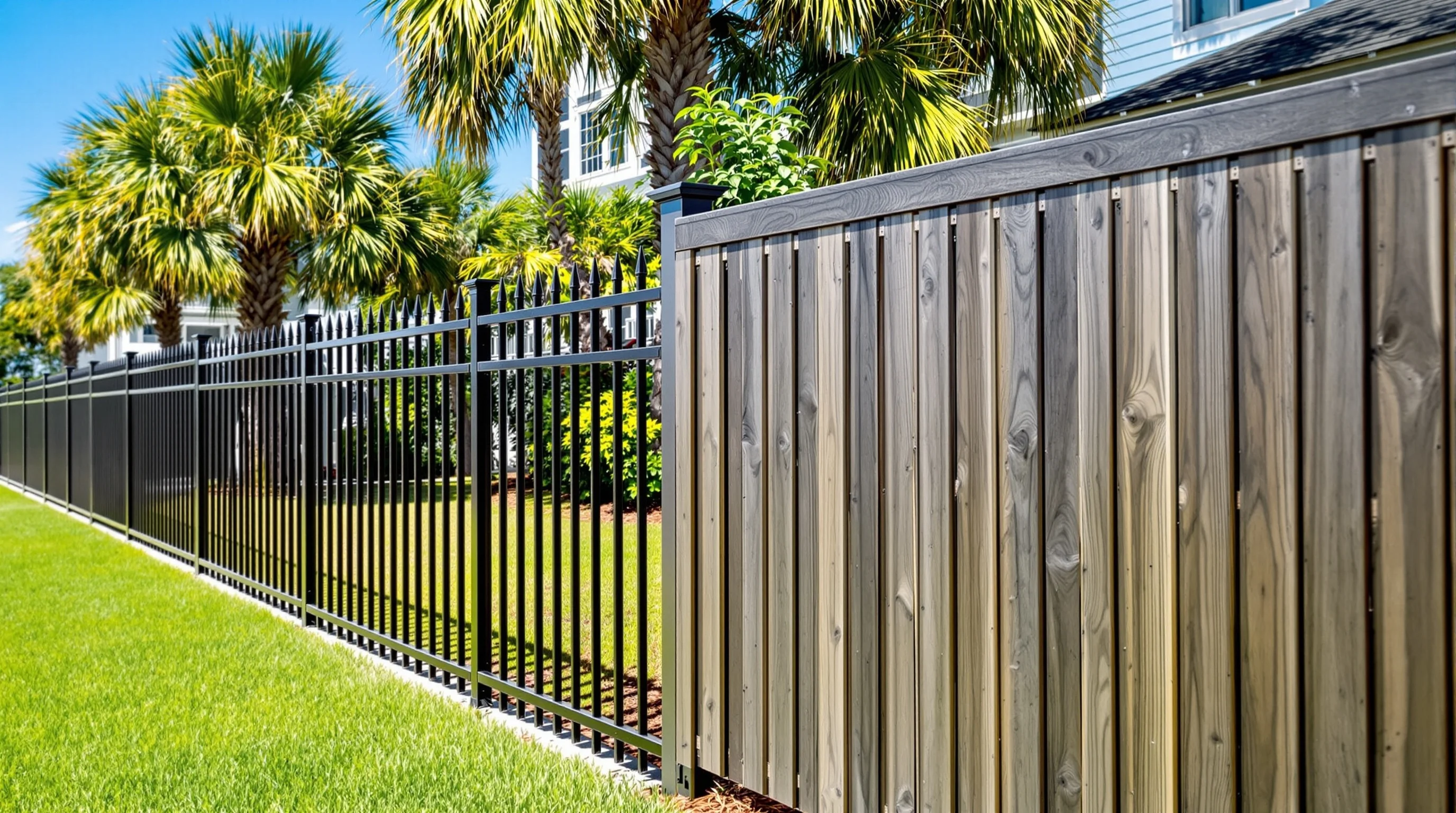
If you own a home in Charleston or anywhere along the South Carolina coast, you know the struggle: salt air, humidity, and tropical storms test everything on your property. Your fence takes the brunt of it. When it's time to choose between aluminum and wood, the decision comes down to one question: which actually lasts in a coastal climate?
We install both across the Lowcountry, from downtown Charleston to Mount Pleasant to Summerville. Here's what we've learned from real installations — not manufacturer brochures.
The Problem with Wood on the Coast
Wood fences are beautiful when new. A fresh cedar or pressure-treated pine fence gives any property that classic Southern look. But Charleston's climate is brutal on wood. High humidity keeps moisture levels elevated year-round, so rot and decay set in faster than they would inland. Salt spray from the ocean accelerates the process even more.
A wood fence in Charleston typically needs staining or sealing every 12 to 18 months. Skip one season and you will see graying, splitting, and warping. In our experience, a well-maintained wood fence lasts 8 to 12 years on the coast before major repairs are needed. Neglected? You are looking at 5 to 7 years.
Why Aluminum Fences Hold Up
Aluminum fencing is powder-coated at the factory. That baked-on finish is far more durable than paint or stain applied in the field. Salt air does not rust it — aluminum naturally forms a protective oxide layer. Unlike steel, it does not corrode when the coating gets scratched.
An aluminum fence installed on a Charleston property should easily last 25 to 30 years with basically zero maintenance. You do not stain it. You do not seal it. You hose it off once a year if you want it to look new. That is the difference a material makes when it is designed for the coast.
Cost: Upfront vs. Lifetime
Wood fencing runs about $18 to $30 per linear foot installed in the Charleston area, depending on species and height. Aluminum runs $25 to $40 per linear foot. So aluminum costs more upfront — about 30 to 40 percent more.
But here is where the math flips. Over 20 years, a wood fence will need at least two full replacements. That is $36 to $60 per linear foot twice — plus staining supplies every year. An aluminum fence installed once at $30 per foot with no maintenance costs half as much over two decades.
Privacy: The One Place Wood Wins
If privacy is your top priority, wood is better. Aluminum fence styles with pointed pickets have gaps between the rails. Even privacy-style panels with closer pickets do not give you the solid barrier that a six-foot privacy fence provides. If you want to block the view from your neighbor's second-story window, go with wood or pair your aluminum fence with landscaping.
Storm Resistance
When a hurricane or tropical storm blows through, a solid wood privacy fence acts like a sail. We have seen entire fence sections blown flat by 80 mph winds. Aluminum fences are open — wind passes right through. They are also lighter, so they put less stress on the posts. A properly set aluminum fence will survive storms that would tear a wood fence apart.
Our Recommendation for Charleston Homeowners
If your property is within five miles of the coast, we almost always recommend aluminum. The salt air alone makes wood a losing proposition over the long term. If you are further inland in Summerville, Moncks Corner, or Ridgeville, wood can work — but only if you commit to the maintenance schedule.
For homeowners who want the look of a traditional wood fence without the yearly paint job, consider an aluminum fence in the front yard with a wood privacy fence in the backyard. Best of both worlds.
Ready to Talk Fencing?
We serve Charleston, Summerville, Mount Pleasant, and the entire Lowcountry. We'll help you pick the right material for your property.
(803) 855-1001
Free EstimateFence Materials
- Wood Privacy
- Aluminum & Ornamental
- Vinyl
- Chain Link