

Best Fence Materials for Livestock in Cordova, SC
By Dubya Fence Company | April 19, 2026 | 8 min read
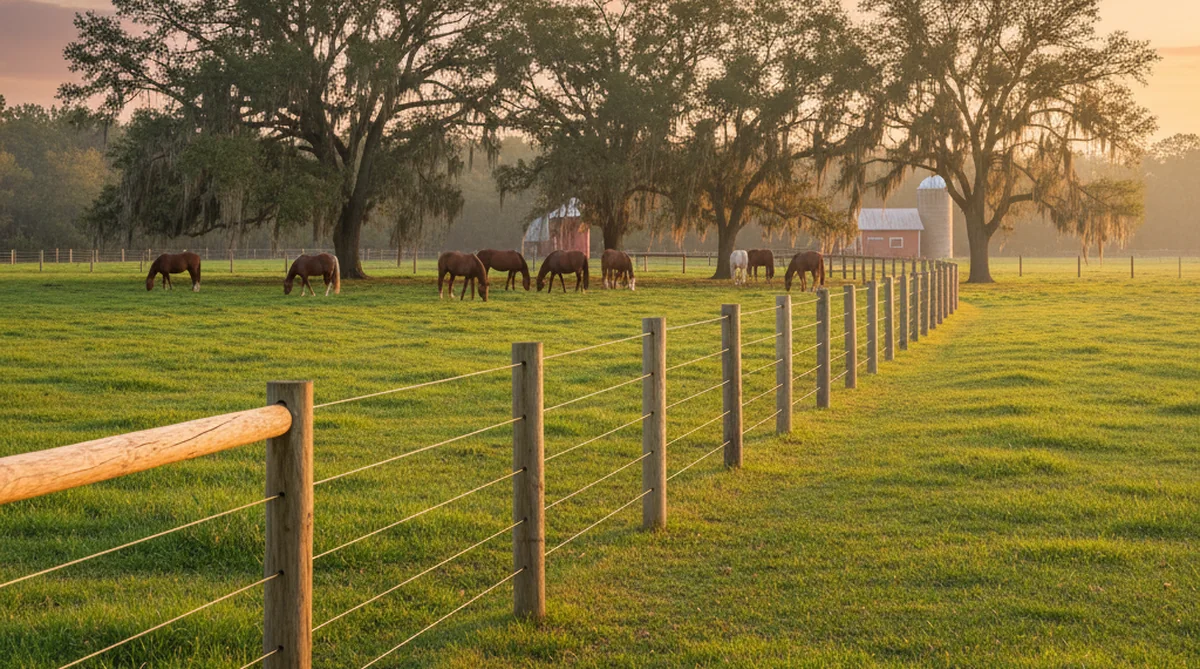
The best fence materials for livestock in Cordova, SC are high-tensile wire, woven wire, and board fencing, with the optimal choice depending on your specific livestock type, property terrain, and budget. For most Orangeburg County farms raising cattle, horses, or goats, a combination of woven wire with wooden posts provides the ideal balance of durability, visibility, and containment in our humid Lowcountry climate.
Why Fence Material Selection Matters for Cordova Livestock Operations
Choosing the right fence material is critical for protecting your livestock investment and maintaining property boundaries in Cordova. The wrong fencing can lead to escaped animals, predator attacks, and costly repairs, especially given our region's weather challenges including high humidity, occasional flooding from nearby Lake Marion tributaries, and the intense summer heat that can warp or weaken inferior materials. Quality livestock fencing also increases property values and ensures compliance with Orangeburg County agricultural regulations while providing the security your animals need to thrive.
High-Tensile Wire Fencing: Cost-Effective Livestock Containment
High-tensile wire fencing offers excellent value for large pasture areas in Cordova, making it particularly popular among cattle ranchers throughout Orangeburg County. This fencing type uses smooth, high-strength steel wire that's tightly stretched between posts, creating a springy barrier that livestock quickly learn to respect. The wire's flexibility allows it to absorb impact without breaking, which is essential when dealing with larger animals or areas with significant wildlife pressure.
The main advantages include:
- Lower material costs compared to other fencing options
- Reduced maintenance requirements due to the durable galvanized coating
- Easy visibility across property lines
- Excellent longevity in Cordova's humid climate when properly installed
However, high-tensile wire requires proper tensioning during installation and may not be suitable for horses prone to getting tangled or smaller livestock that could slip through the strands.
Woven Wire: The Versatile Choice for Mixed Livestock
Woven wire fencing provides superior containment for multiple livestock types, making it the top recommendation for Cordova farmers raising goats, sheep, or mixed herds. This fencing features horizontal and vertical wires woven together to create rectangular openings that become smaller toward the bottom, preventing even small animals from escaping while maintaining structural integrity. The tight weave also offers excellent predator protection—an important consideration for Orangeburg County properties where coyotes, wild hogs, and stray dogs pose ongoing threats to livestock.
When selecting woven wire, choose options with:
- Galvanized or polymer-coated finishes to resist rust in our Lowcountry moisture
- Appropriate mesh spacing for your specific livestock (2x4-inch for goats and sheep, 6x6-inch for cattle)
- Class 3 galvanization for maximum corrosion resistance
- Paired wooden or T-posts every 8-12 feet for proper support
Board Fencing for Horses and High-Value Livestock
Board fencing represents the premium choice for horse farms and high-visibility properties in Cordova, combining exceptional safety with attractive aesthetics. Traditional wooden board fences or modern vinyl alternatives create highly visible boundaries that horses can easily see and respect, reducing the risk of collision injuries that can occur with wire fencing. Many equestrian facilities along Highway 33 and throughout Orangeburg County choose board fencing for paddocks, riding arenas, and property perimeters where appearance matters as much as function.
If you're considering board fencing for your Cordova property, our team at Dubya Fence Company can help you select the right materials and design. As the only AES access control dealer and only automated gate contractor in the territory, we can also integrate automated entry systems with your board fence installation for added convenience and security. Call us at (803) 855-1001 to discuss your livestock fencing project.
Pipe and Cable Fencing: Durability for Rough Terrain
Pipe and cable fencing systems excel in areas of Cordova with challenging terrain or properties requiring maximum durability against large livestock. This fencing type uses steel or aluminum pipe rails supported by heavy-duty posts, with optional cable strands for additional security. The substantial construction stands up to cattle pressure, won't warp in heat, and handles the occasional flooding that affects low-lying Orangeburg County properties near creeks and wetlands.
While pipe fencing carries a higher initial investment, the virtually maintenance-free lifespan of 30+ years makes it cost-effective over time. It's particularly valuable for:
- Bull pens and breeding areas requiring extra strength
- Properties with sandy or unstable soil conditions common in our area
- High-traffic zones near barns and loading areas
- Perimeter fencing where security is paramount
Electric Fencing: Temporary and Rotational Grazing Solutions
Electric fencing provides flexible livestock management options for Cordova farmers practicing rotational grazing or needing temporary paddock divisions. A mild electric shock trains animals to respect fence boundaries, allowing lighter-weight materials to effectively contain livestock that might otherwise challenge conventional fencing. This makes electric fencing ideal for subdividing larger pastures, protecting specific crop areas, or creating seasonal grazing rotations that improve pasture health across your Orangeburg County property.
Modern solar-powered energizers work exceptionally well in Cordova's sunny climate, eliminating the need for electrical connections in remote pasture areas. You can use electric fencing as a standalone system with polywire or polytape, or add an electrified strand to existing woven wire or board fences for additional deterrence. Keep in mind that electric systems require regular vegetation management along fence lines to prevent shorts, and performance can be affected by our region's dry sandy soils that may need grounding rod enhancement.
Choosing the Right Fence Material for Your Cordova Property
Selecting the optimal livestock fencing for your Cordova operation depends on several property-specific factors beyond just livestock type. Consider your budget for both installation and long-term maintenance, the topography of your land, whether you need automated gate access for convenience, and your timeline for completion. Dubya Fence Company brings extensive experience with Orangeburg County properties and understands the unique challenges our climate and soil conditions present for livestock fencing.
We recommend scheduling a property consultation where we can assess your specific needs, from basic perimeter fencing to complete livestock containment systems with automated gates. Our expertise as the area's only automated gate contractor means we can design comprehensive solutions that combine the best fence materials with convenient access control systems, whether you need simple vehicle gates or sophisticated AES access control for multiple entry points. The right fencing investment protects your livestock, preserves your property value, and provides decades of reliable service when properly designed and installed for Cordova's specific conditions.
Frequently Asked Questions
What is the most affordable fencing option for cattle in Cordova, SC?
High-tensile wire fencing is typically the most cost-effective option for cattle operations in Cordova, with material costs significantly lower than board or pipe alternatives. When professionally installed with proper tensioning, it provides reliable containment for cattle while requiring minimal maintenance in our Lowcountry climate.
How long does livestock fencing last in Orangeburg County's humid climate?
Properly installed galvanized wire fencing typically lasts 20-30 years in Orangeburg County, while treated wooden posts last 15-25 years depending on wood type and ground contact conditions. Vinyl board fencing and pipe fencing can last 30+ years with minimal maintenance, making them excellent long-term investments despite higher initial costs.
Can I use electric fencing as my primary livestock fence in Cordova?
Electric fencing works well as a primary containment system for trained cattle and horses in Cordova, especially when using multiple strands at appropriate heights. However, for goats, sheep, or untrained animals, it's better used as a supplement to physical barriers like woven wire or board fencing to ensure reliable containment.
What fence height do I need for horses in Cordova, SC?
Horse fencing in Cordova should be a minimum of 4.5 to 5 feet tall for most horses, with 5 to 6 feet recommended for stallions or horses known to jump. Board fencing at these heights provides excellent visibility and safety, while preventing horses from reaching over and potentially injuring themselves on fence tops.
Do I need special fencing considerations for flood-prone areas in Orangeburg County?
Yes, properties near Lake Marion tributaries or low-lying areas should use fencing materials that can withstand periodic submersion, such as galvanized or polymer-coated wire and treated or composite posts. Avoid untreated wood and standard steel posts in flood zones, and consider designs that allow water and debris to pass through rather than creating dams during high water events.
Published April 19, 2026 | Dubya Fence Company serves Orangeburg, Cordova, North, Rowesville, Cameron, and all of Orangeburg County, SC.