

Loop Detectors vs. Photo Eyes for Automatic Gates in Orangeburg SC
By Dubya Fence Company | July 12, 2026 | 8 min read
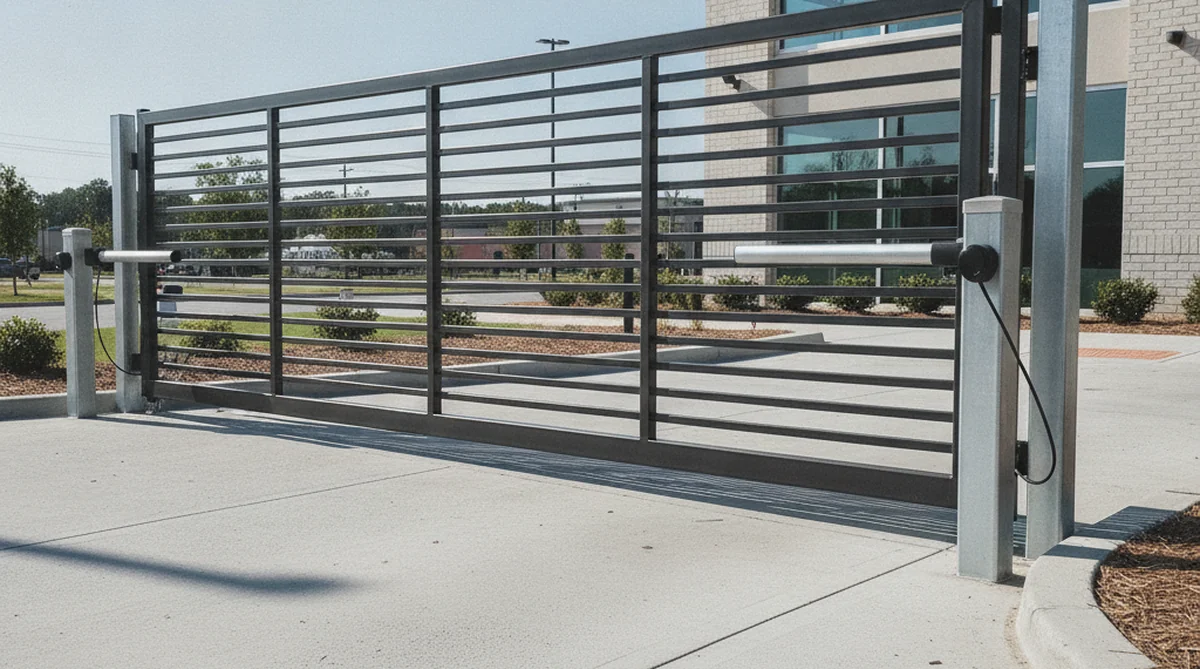
Loop detectors and photo eyes both serve as automatic gate safety sensors in Orangeburg, SC, but loop detectors are buried wire systems that sense metal vehicles while photo eyes use infrared beams to detect any obstruction in the gate's path. The best choice depends on your specific gate application, traffic patterns, and whether you're securing a commercial facility or residential property in Orangeburg County.
How Do Loop Detectors Work for Automatic Gates?
Loop detectors operate by sensing changes in electromagnetic fields when a vehicle passes over buried wire loops in your driveway or gate approach. When we install a loop detector system at your Orangeburg property, we cut a slot in the pavement (typically asphalt or concrete), embed a wire loop 2-4 inches deep, seal it with flexible sealant, and connect it to a detector card in your gate operator. As a vehicle's metal mass enters the detection zone, it changes the inductance of the loop, triggering the gate to open or preventing it from closing on a vehicle.
Loop detectors are particularly effective for automated gates in commercial applications throughout Orangeburg County because they specifically detect vehicles rather than pedestrians, leaves, or other debris. This selectivity makes them ideal for facilities that need to distinguish between vehicle and pedestrian traffic, such as industrial parks off Highway 301 or storage facilities near the Edisto River.
What Are Photo Eyes and How Do They Protect Your Gate?
Photo eyes (also called photo beams or safety eyes) consist of two components mounted on opposite sides of your gate opening—a transmitter that sends an infrared beam and a receiver that detects it. When any object interrupts this invisible beam while your automatic gate is closing, the system immediately reverses the gate's direction or stops it completely, preventing damage or injury. This makes photo eyes an essential safety device that we install on virtually every automated gate system in Orangeburg.
The technology is straightforward but highly reliable: as long as the receiver detects the transmitter's beam, the gate knows the path is clear. Break that beam with a vehicle, person, pet, or even a bicycle, and the gate responds instantly. For residential properties in Orangeburg's historic neighborhoods or newer developments, photo eyes provide peace of mind that children, pets, or visitors won't be struck by a closing gate.
Which System Works Best for Swing Gates vs. Slide Gates?
Both swing gates and slide gates benefit from using loop detectors and photo eyes together, though their placement and function differ based on gate type. For swing gates common in Orangeburg residential properties, we typically install exit loops on the inside to trigger the gate to open when you're leaving, and photo eyes across the gate opening to prevent the gate from striking a vehicle during closing. The photo eyes mount on posts at bumper height, creating a protective beam across the swing path.
Slide gates, which are popular for commercial properties in Orangeburg County due to their space efficiency, use a similar configuration but with different geometry. We position loop detectors in the driveway to detect vehicles approaching or waiting, while photo eyes mount on either side of the slide gate track to create a beam perpendicular to the gate's travel. As the only automated gate contractor in the territory, Dubya Fence Company has installed hundreds of both gate types throughout Orangeburg and understands the specific detector configuration that works best for your property layout and traffic patterns.
What Are the Advantages of Loop Detectors?
Loop detectors offer several distinct advantages that make them the preferred vehicle detection method for many Orangeburg commercial and industrial gate applications. First, they're highly selective—they detect vehicles but ignore pedestrians, animals, and wind-blown debris, reducing false activations. Second, they're completely weatherproof since they're buried underground, unaffected by South Carolina's intense sun, rain, or the occasional ice storm we experience in Orangeburg County.
Loop detectors also provide "free exit" functionality that's code-required for many commercial applications. When a vehicle pulls up to your gate from the inside, the exit loop detects it and opens the gate automatically without requiring the driver to use a keypad, remote, or access control credential. This is especially valuable for businesses along John C. Calhoun Drive or other commercial corridors in Orangeburg where smooth traffic flow matters. Additionally, loops are invisible once installed—there are no posts or devices to maintain the aesthetic appearance of your property.
If you're considering an automated gate system for your Orangeburg business or home, call Dubya Fence Company at (803) 855-1001 to discuss whether loop detectors, photo eyes, or a combination of both best suits your needs.
What Are the Advantages of Photo Eyes?
Photo eyes provide critical safety functions that loop detectors cannot match, making them an essential component of any automatic gate installation in Orangeburg. Their primary advantage is detecting any obstruction—not just vehicles but also people, children, pets, wheelchairs, and objects in the gate's path. This universal detection capability makes photo eyes the most important safety device for preventing gate-related injuries.
Installation and maintenance of photo eyes is also simpler and more flexible than loop detectors. We can mount them on existing gate posts, fence posts, or dedicated columns without cutting pavement or dealing with underground wiring that might be damaged by future landscaping or utility work. For existing gates in Orangeburg that need safety upgrades, adding photo eyes is far less disruptive than installing loops. They're also easy to test—simply walk through the beam while the gate is closing to verify proper operation.
Photo eyes respond instantly to obstructions with no delay, providing faster reaction times than loop detectors. For residential properties in Orangeburg with children or pets, this immediate response is invaluable. The visible indicator lights on photo eye units also make troubleshooting simple—if the lights show misalignment, you'll know maintenance is needed before a problem occurs.
How Should Orangeburg Property Owners Choose Between Loop Detectors and Photo Eyes?
The best answer for most Orangeburg automatic gate installations is that you shouldn't choose between loop detectors and photo eyes—you should use both systems together for optimal functionality and safety. As the only AES access control dealer and automated gate contractor in the territory, Dubya Fence Company designs comprehensive gate automation systems that combine multiple detection and safety technologies tailored to your specific application.
A typical commercial gate installation in Orangeburg County might include an entry loop to detect approaching vehicles and trigger your AES access control system or intercom, exit loops for free-exit functionality, and photo eyes for obstruction safety during closing. Residential properties often use a simpler configuration with photo eyes for safety and possibly a single exit loop for convenience. Your decision should factor in your gate type (swing or slide), traffic volume, whether you need vehicle-only detection, ADA compliance requirements for commercial properties, and your budget.
The pavement condition at your Orangeburg property also matters—if you're installing a gate in a new driveway, adding loops during construction is cost-effective. For existing gates with aged asphalt that might crack when cut, photo eyes alone might be the better choice. Gate automation technology has advanced significantly, and modern gate operators work with telephone-entry systems, keypads, intercoms, and sophisticated AES access control platforms that integrate seamlessly with both loop detectors and photo eyes.
Dubya Fence Company brings years of experience installing and servicing automatic gates throughout Orangeburg and the surrounding areas. We understand local soil conditions, typical driveway materials, and the specific challenges of our South Carolina climate. Whether you're securing a residential estate, commercial facility, storage complex, or industrial site in Orangeburg County, we'll recommend the detection and safety system configuration that provides reliable performance and meets all safety codes.
Frequently Asked Questions
Can I use just photo eyes without loop detectors on my Orangeburg automatic gate?
Yes, you can use photo eyes alone, and many residential gates in Orangeburg operate safely with only photo eye safety sensors. However, you'll miss the vehicle detection benefits that loops provide, such as automatic opening when exiting and the ability to detect waiting vehicles without requiring the driver to press a button or use a remote.
How long do loop detectors last in Orangeburg's climate?
Properly installed loop detectors typically last 10-15 years or longer in Orangeburg County, even with our hot summers and occasional freeze-thaw cycles. The wire loops themselves are durable, though the sealant may need maintenance over time, and the detector electronics occasionally require replacement.
What happens if photo eyes get misaligned on my automatic gate?
If photo eyes become misaligned due to a vehicle impact, settling, or weather, your gate will typically refuse to close as a safety precaution. Most photo eye systems have indicator lights that help you diagnose alignment issues, and Dubya Fence Company can quickly realign them during a service call to restore proper operation.
Do loop detectors work with all types of vehicles?
Loop detectors work with virtually all vehicles including cars, trucks, motorcycles, and golf carts because they detect metal mass. However, bicycles may not have enough metal to reliably trigger loops, which is why photo eyes are important for mixed-use paths or properties where non-motorized traffic is common in Orangeburg.
Are loop detectors required by code for commercial gates in Orangeburg?
While specific requirements vary by application, most commercial automatic gates in Orangeburg County need some form of vehicle detection for safe operation, and many jurisdictions require exit loops specifically for free-exit functionality. Photo eyes are typically required as obstruction safety devices, and Dubya Fence Company ensures all installations meet applicable safety codes and ADA requirements.
Published July 12, 2026 | Dubya Fence Company serves Orangeburg, Sumter, Summerville, Bamberg, Holly Hill, and surrounding counties in the SC Midlands.